We don't get many hard freezes here. That's the problem.
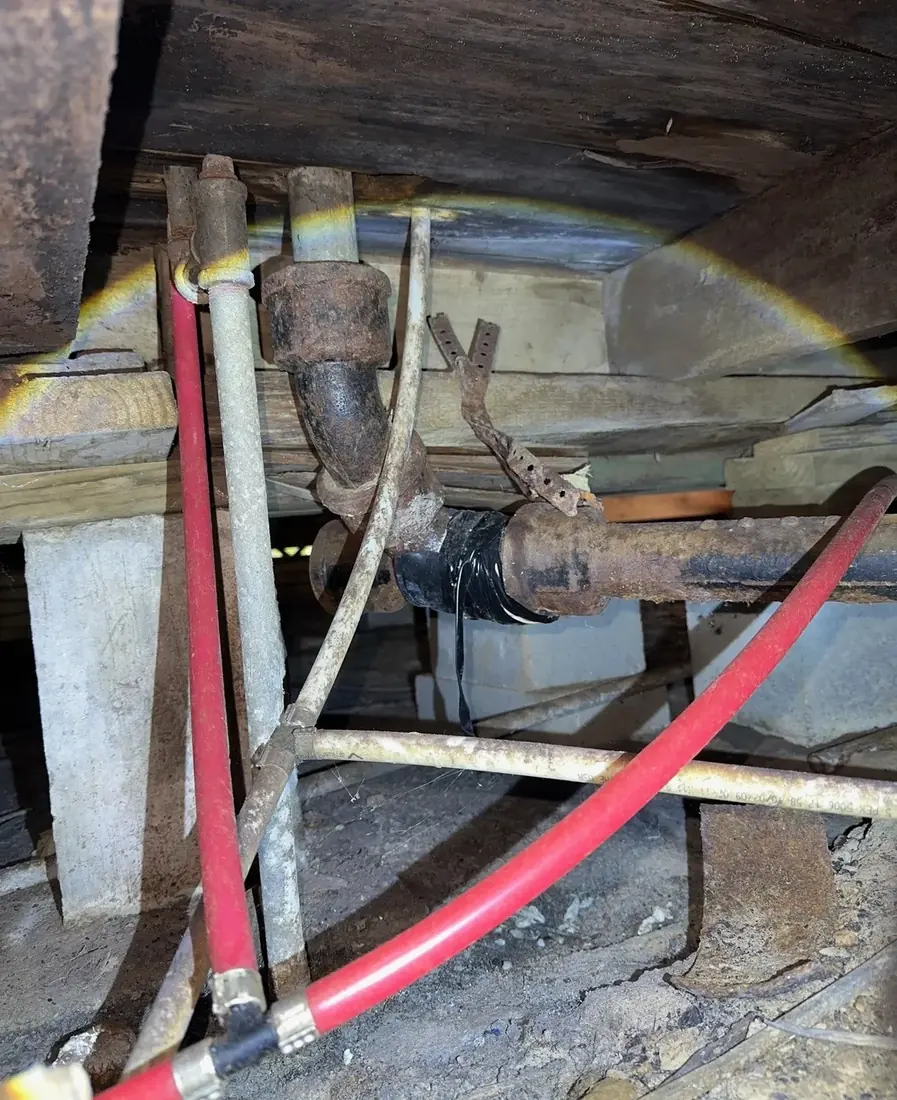
Up north, houses are built for cold and people are used to it. In East Texas, a hard freeze shows up a few nights a year, and plenty of homes have pipes in crawl spaces, exterior walls and attics that were never really meant to see 15 degrees. Anyone who lived through February 2021 remembers how fast that turns into burst pipes and soaked ceilings.
"Most freeze damage I see wasn't bad luck. It was a pipe nobody knew was exposed, and a shutoff valve nobody could find."
— Jeff Stalnaker, Owner & Lead Inspector
Before the first cold snap
- Find your main water shutoff and make sure everyone in the house can get to it. When a pipe lets go, minutes matter.
- Disconnect garden hoses from outdoor spigots. A hose left attached traps water in the spigot and the pipe behind it.
- Insulate exposed pipes in crawl spaces, attics, garages and pump houses. Foam sleeves from the hardware store are cheap.
- Close crawl space vents or cover them during hard freezes on pier-and-beam homes, then reopen them when it warms up.
- Have the heat checked before you need it. A furnace that hasn't run since March deserves a look.
- Test your smoke and carbon monoxide detectors. Heating season is carbon monoxide season, especially with gas furnaces, water heaters and fireplaces.
When a freeze is in the forecast
- Let faucets on exterior walls drip, hot and cold. Moving water is much harder to freeze.
- Open the cabinet doors under kitchen and bathroom sinks so the house's heat can reach the pipes.
- Keep the thermostat steady, day and night, even if you're away.
- Well owners: make sure the pump house or well equipment has some protection. A frozen pressure switch or tank line means no water to the whole house.
- Pool owners: keep the pump running during the freeze. Moving water protects the equipment and plumbing. Most freeze-damaged pool equipment I've seen had the pump turned off.
If a pipe bursts anyway
Shut off the main water first, then call a plumber. Turn off the water heater if the house is going to be without water for a while. Take photos before you clean up, because your insurance company will want them.
Where an inspection helps
During an inspection I look at the plumbing I can see, including pipes in the crawl space and attic, the water heater, the heating system and the detectors. If I spot supply lines with no insulation in a spot that's going to get cold, it goes in the report so you can fix it for a few dollars now instead of a few thousand later.
General guidance, not a guarantee. For anything already leaking, call a licensed plumber.
Related on this site
Got a Question About a House? Just Ask.
Call or text me — I'm happy to talk through what you're seeing before you ever book anything. That's half the reason I do this job. And when you're ready, I personally do every inspection and walk you through what I found, in plain English.
12-Hour Reporting · 200% Satisfaction Guarantee · 90-Day Warranty
Discounts for military, veterans, first responders, and teachers — just ask.
Keep Reading
Should You Attend Your Home Inspection? (Yes, Here's Why)
If your schedule allows, be there for the whole inspection. It's the best chance you'll get to learn the house before yo…
Read itCan a House Fail a Home Inspection?
No. There's no pass or fail in a Texas home inspection. The house gets documented for the buyer, so you can make your ow…
Read itPier-and-Beam vs. Slab Foundations in East Texas
Neither one is automatically better. Here's how each foundation type behaves on our clay soil, what I look at during an …
Read it